Is BSE the New Game!

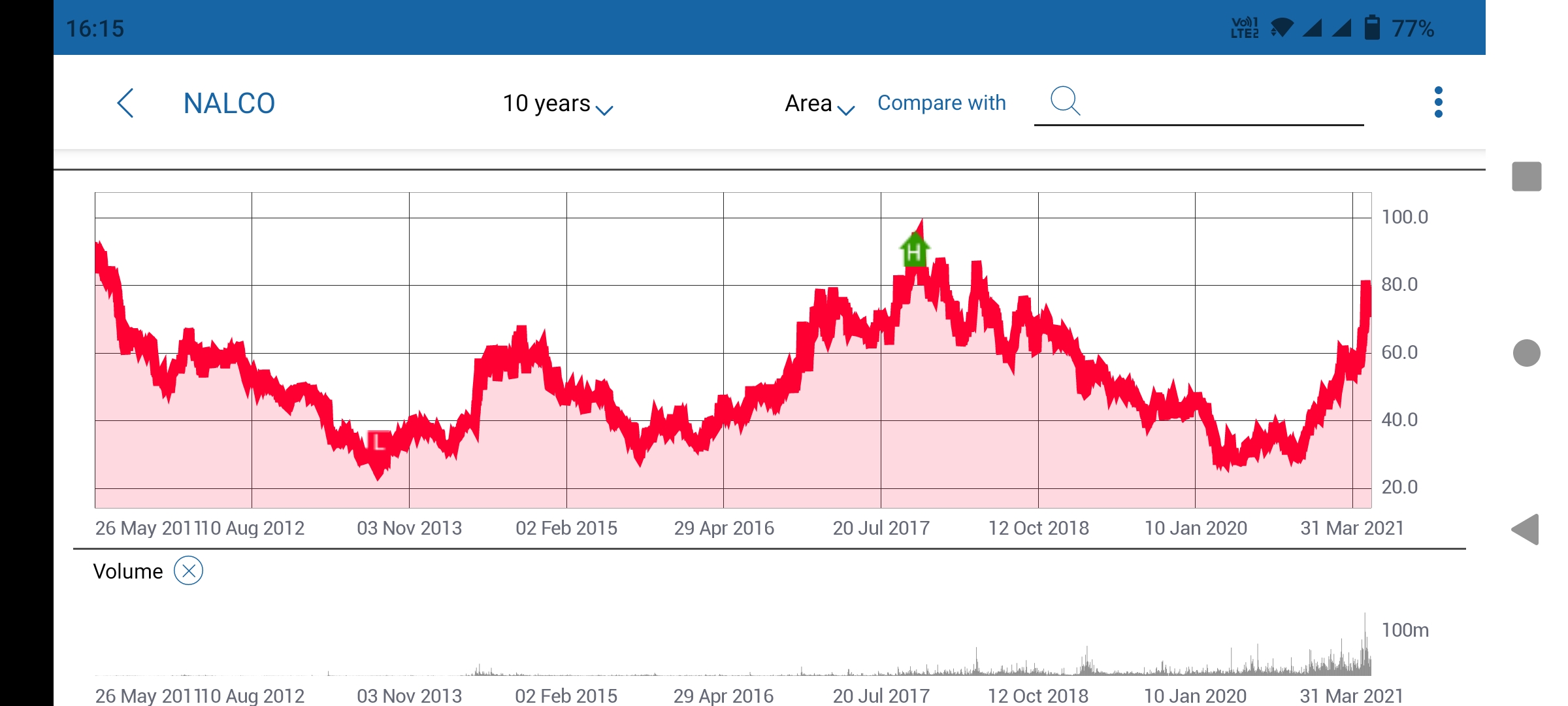
My liking for this stock goes back to 2018, when I picked some of it at 735! It is now inching back to where it was but why do I ask everyone around me to lap it up, even when it’s up 2.5x from its March 2020 low! Let’s try and see where I believe this one’s headed
My thesis is simple-
1600 crore of cash on balance sheet is ~350rs per share. That leaves another 350 rupees to pay for it, net of cash available. Also, the building it owns is one of the most iconic heritage building in Mumbai, whose valuation can be anything between 1000-3000crore, depending on what you think it may sell for. PS- ADAG headquarters in Santacruz recently was sold for 1200crores. And this building is much bigger and located in plumest of the plum location in Mumbai. So, take your call. Also, CDSL is now valued at 8000crores market capitalisation,of which BSE owns 20%. Even after allowing for holding company discount, you get close to 1000 crores value left. Add all this, and the company’s liquidation value is not less than 5000crores, which is close to Rs. 1100/share. Also, the iconic brand which BSE owns can be atleast worth a 100crores.
Now you come to the present business of the firm. It does close to 100-150crores profit every year, and even at 15 times earning, it is atleast worth 1500 crores( on the conservative side). The peer NSE trades at 10 times book in gray market, while BSE is still 1.1 time book. Further, it gives back 95% of standalone profits back as dividends and needs zero money for capex- thus it has no threat of a potential dilution of equity and the per share value will only rise in the years to come.
So the base case is that it should be valued at close to 7000 crores, or close to Rs. 1500 per share. Let’s place some more facts here:
Zerodha has been raising stake in BSE steadily over the past three quarters and now owns 2.16% as on end of March 2021 quarter. It’s StarMF platform is being valued at close to 2000 crores, as the firm looks to divest it’s stake partially. And most importantly, for any of you who has been bamboozled by IEX’s dream run, BSE has also got approval for its own power exchange-Pranurja.
The reason why I believe BSE can be valued north of a Billion$ is that if NSE is ten times BSE, and if NSE is being valued at close to $11 billion, BSE can’t be less than a billion.
However, the real juice is hidden,in GIFT City- the India INX, owned by BSE has 78% market share in there. Also, it is not yet being monetised and is making operational losses. This is a startup clamoring for attention, right before our eyes. If all these startups, burning cash left and right are being termed as unicorns by Private Equity guys, I see no reason that a real market leader, almost a monopoly can be valued as low as $40million- yes, ICICI Bank bought 10% in INX at 300crore valuation. If at any point we get lucky, and we must hold it like a long shot, and INX gets its true calling, this can go up 10 times in 5-6 years. I know this sounds crazy, but big bucks are made by crazy longshots, not staple Levers and HDFCs.
We all only took notice of Bitcoin when it was north of $5000-when the guys who bought it for a dollar were already billionaires- read this fantastic book “The Bitcoin Billionaires by Ben Mezrich”.
So here’s my two cents- the downside in BSE is next to nil and upside is atleast a double. But, and it’s a big But, if the hunch is right, you can make big bucks. Tell me what do you think!

ps: today it’s trading at 865 and feels very sweet to know that I have even bought it at 283! Anyways, this is still the beginning. Who knows, five years down the line, this might be up 5-10x from here and we’ll all look at it and say, waah modiji waah!

Honesty remains the Best Policy!

One can fool others but not oneself. It’s an old adage with deep meaning, especially if you’re in the world of stocks. You can call yourself an investor all life long and still never make it big. Why? For you were a trader in mind and punter at heart.

It’s essential to know who you are and what you are trying to accomplish in the market. It’s okay to know that you are trying to make a quick buck to fund your new iPhone or simply acting on a tip your colleagues passed along with a coffee in office as long as you don’t begin to intellectualise your gambling as Investing. The word investing has only one meaning- buying a growing asset which generates cash flow over time, at a price you find reasonable. Whenever you look at a stock, what you’re buying is future value of all cash generated by the underlying company which will lead to price appreciation and dividends.

Where people confuse this is when they look at price and say oh Reliance is very expensive at 2000, let me buy Adani green as it wil go up to 1300. Chemical stocks are doing well so let me buy whatever amine and make 15% in ten days. Whenever you’re chasing price as the soul indicator of risking money, you’re not investing. It’s termed as trading, if not plain punting and is a perfectly legal and legitimate way to earn money. However, most people will never like to be called as traders. Investing sounds classy, trading sounds cheap. Hence, they themselves falsely fall pray to this trap and confuse what exactly they have set out to do.

When you begin to lie to yourself, you’re sure to be screwed. You don’t know if you’re buying Tata Steel at 800 because you are sure that the steel industry is on a genuine upswing or just because the momentum indicator green flags the stock. This works well as long as the market is rising and most punters come on Twitter to rain applause on how fundamentally sound Jain irrigation was or how DHFL is the new HDFC as both went up close to 10x in a good market. You don’t want to be associated with someone buying HUL or SBI when the junk is shining more than gold. As long as the markets are rising, and the occasional dips are bought with vengeance, the system is sound. Everyone buying Vakrangee and PC jewelers and MS Shoes is in the same league of investors buying stable well bred horses.

One fine day some NBFC defaults or some promoter is sacked or something else goes wrong somewhere in the world and the music stops. You are so high on junk that you’re sure it’s just like the most recent dip which was followed by a rally that you don’t care. You have long sold Reliance and TCS for Adani green and some fancy chemical company and are now a true believer in their potential to make the world a better place. You are absolutely certain because your broker has confirmed that it will keep going up and you don’t have to worry a bit. CNBC analyst confirms that there is some massive breakout waiting to happen and this is a technically strong stock. Until it isn’t!

The market cracks 20% in two weeks and your portfolio is down double that. Since you’ve long forgotten that all you were trying to do was to ride the upswing in a bull market trying to make 30% and have falsely believed yourself to be a long term investor, you are now in a fix. You don’t want to sell in a hurry. You are sure that this is just a shakeout from weak hands to strong hands and you have diamond hands! Dewan housing is bound to be the next HDFC. You just can’t be wrong on this one. To this day, you have never held a stock for more than two months but now you suddenly dig up ten year charts, confirming your belief that it has always bounced back from 200DMA. It is a blue chip after all. Half your office owns this stock. It can’t go wrong.

However, it’s different this time. The market falls further and your favorite stock quickly goes down in lower circuits. After its down 80% from its peak, you and others finally realise what it was- horseshit. And since you didn’t sell it at 100, you sure won’t sell it at 40,30 or 20. The stock then languishes in your demat account forever. You finally accomplish your true calling- becoming a long term investor.

In this age of technology, you can learn from best of the minds, both in trading and in Investing almost free of cost. The key is to choose your God’s wisely and be honest with yourself. If you’re honestly gambling with ten thousand rupees, you’ll quietly book a loss and get out at -20%. Don’t make a trade or a label a matter of prestige. As long as you are sure and certain of your limitations, you’ll not go broke. As Mark Twain has said- it’s not what you don’t know gets you into trouble, it’s what you know for certain and isn’t!

Bet Big on India- it Works


I’m an India optimist. In times like ours when there’s gloom and doom all around, it’s bold to make that call. For me, it’s not bold, but a way of life. Some people willl forever want us to live like a third rate country while I have faith that we will be a $10 trillion economy in 20 years. I’m also placing my money where my mouth is, and if the bets go right, the rewards will be outlandish.
First, for the naysayers. There is a growing tribe in our country which is professionally pessimistic. Besides, they also hate most things Indians and are perennially trying to bring out the worst in our nation to somehow pin us down. They report that the people are suffering due to Covid-19 not because that they care, but because it tarnishes the India story. Oh, Indians are dying and the government is helpless. I am sure if 1962 were to happen today, they won’t pitch in for help, but be happy that India was losing the war. Just because their political opinions aren’t aligned with the party in power currently, they go at lengths to pin the blame for everything on government while carefully avoiding the fact that every single developed country was on its knee before Covid-19, not until too long ago. I recall a TV serial Khichdi when Babuji would say “meine to pehle hi kaha tha ye ladki Raju ke liye theek nahi hai” for everything wrong in this world. Replace Modi with ladki and Raju with India, and you know what I’m saying.
Coming back to our discussion. India is currently closing on to a gdp of $3 trillion. Over the next ten years, even at 5%, we will be close to $5 trillion gdp. However, the incremental growth will not be evenly distributed, like it’s the case with all economies. Some businesses which are well run and can reap the rewards will be benefitted beyond belief. On the other hand, those struggling to survive will either be forced ro shut down or merge with the bigger ones. HUL currently sells close to $5 billion annually in India. However, Unilever global sales are close to $150billion thereabouts. The combined AUM of Indian MF industry is close to $400 billion whereas Fidelity or Vanguard individually handle more than $500 billion each. Diageo has market cap of $105billion while United Spirits is
hardly $5b. The profits for some of the companies are going to be mind boggling,
Indian household savings are slowly moving towards the financial sector. Non lending financial companies, such as brokers, stock exchanges, asset management companies, etc. will see their revenues grow 10,20,50x over the next 10-15 years and profits growing even 50x, as they require little to no capital for expansion. Since there is no likely dilution of equity, the share prices will grow 100x and maybe more. This is one sector you must put some money to work.
Second, as I mentioned earlier, the consumption companies are going to grow like anything. This FMCG story is still in its infancy in India. As our per capita income rises beyond $2500, we will see discretionary consumption shooting trough the roof. Well run leaders will be able to capture even larger market share and they can deliver steady returns, even at these lofty valuations.
India still has a large rural market where people are slowly moving up the economic ladder. In these markets, buying the first two wheeler,or the first car is still a big play. So atleast for the next few years, market leaders in these sectors will only grow bigger.
Electric vehicle is a long shot on the future. Now that Tesla is down 40% and most fancied EV stocks in the US like battery companies are also less frenzied about, this market is slowly maturing. Nobody should have a doubt that the biggest car makers of the world, BMW, Merc, JLr won’t be able to make and sell electric cars just because they aren’t first off the bloc. JLR is already selling half it’s total sales in electric vehicle and this is only going to go up from here.
I’ll give you a number. In 2010-11, Tesla sold close to 5000 ev in US, and was valued at close to $10billion. Last year, it sold close to 500,000 sales and is now valued at over $500billion. Tata Motors sold close to 5000 EVs last year and is currently close to $15billion. If it manages to sell close to 100,000 electric cars a year in let’s say 5 years, which is still going to be a small part of India car market, and if it remains the leading player with over 50% market share, just imagine the kind of valuation it can have. Why I belive that it will be the largest player is common sensical- Maruti has no electric car, even in pipeline while Hundai Kona and MG ZS are too costly at close to 25lakh. Mahindra sells e-Varito but it’s anyways a fringe player in sedans. Nexon EV has first mover advantage and if Tata can bring Altroz EV close to Rs 10lakh, sales can grow exponentially.

However, it is important to know what not to do, what is that you should avoid. In a market when junk has begun to go up everyday, don’t punt with your money on debt laden stocks. In a low interest rate environment, highly indebted companies rise up the most. However, when the tide turns, the downfall is equally ferocious and without an easy exit. When the music stops, it’s always a stampede on the way out. A man who doesn’t owe anyone anything, can not go broke. Give up on the temptation to make quick returns in a bull market and preserve capital for the rainy days. Bet big on India, it has always worked, it always will

Building Portfolio, brick by brick!

Now that you have identified yourself as an Individual Investor, who is not here to make a quick buck, or a lakh but build a portfolio over time, a lot of questions remains to be answered. What to buy, how much to buy and how many of them should you buy!

There are 5000 plus listed companies in the stock market and you certainly cant buy them all. There are some guys who are happy owning less than Ten stocks while some would be willing to buy a Hundred scrips in order to diversify. There are numerous theories on diversification, most recently by Samir Arora when he gave some backtested data proving how a number of companies will do well every year and if you buy close to 25-30 stocks which do reasonably well, you would do great. Then there are guys like Ramdev Agarwal who prefer concentrated portfolio. However, this definition of concentrated and diversification is generally blurred as for me holding five stocks is diversification while you’d say a thirty stock portfolio is concentrated. My point is to not get into this debate at all. Let me elaborate.

As an Individual Investor, you are at liberty to own any stock, in any quantity, for any length of time( assuming it doesn’t blow up). My suggestion is since you’re trying to build your own portfolio, don’t be too structured in the sense falling pray to a false theory which might work only for institutions trying to justify their commissions to their High Net worth clients. The biggest disadvantage they have is that they can’t own the less favoured for it might cost them their jobs sooner than it comes back in favour of the markets.

Once I have a stock in hand, first of all I want to quickly find a reason to not buy it. Stock picking is the art of negation. I don’t own a single chemical stock because as a chemical engineer, nobody in my entire batch wanted to work in any of these companies. Similarly, nobody in my college wanted to work for Infosys or TCS so I’d not own their shares. This allows me to slowly build my circle of competence meaning I can narrow down sectors I can develop greater understanding of. Ofcourse this makes me lose on the great bull runs in certain sectors but this is life, you only get as much. I can leisurely read balance sheets and annual reports and other information pertaining to my type of companies while avoiding everything else happening in the markets. This means I’m least bothered by the noise and know exactly what to buy when I’ve money.

Once I have identified the sectors, then comes the question of individual stock picking. My idea to buy a stock is that it should: 1. Generate sustainable profits over time
2. Have an easy to understand business model
3. If I am not using the product, I atleast know someone who is.
4. The opportunity is visibly large in my idea of how India will be in 2025 and beyond.
5. Capital light i.e. generates enough cash to fund expansion without diluting equity and at the same time requires little to no capex- to expand. 6. There must be little to no debt on its balance sheet. A man who owes nothing can’t go broke. This works well for large companies as well. 7. Dividends must be liberal so that I can hold out without worrying too much about price appreciation in the short term.

Coming to diversification, I don’t want to own more than ten to fifteen stocks for one simple reason. If I like a company, I want to atleast buy significant amount of shares so that if I’m right and the stock goes up, it must move the needle for my networth. This is also one reason why I don’t buy IPOs. If you buy Reliance at 800 and it goes up to 2000, you make 150%. However, what’s more important is the absolute sum of money which you’ve made. If you only bought 10/20/50 shares, you end up making 8-16-40k in the strongest rally in the biggest stock in India. An extremely costly miss. You don’t create wealth by betting less on your biggest ideas. You make it big by loading up the truck once you’ve done the hard work. If your idea after doing so much research and so much hardwork, buying shares in panic and holding them ends up making 50k for you, you are better off putting money in an FD. Since capital is limited and you want to put significant sums to your big ideas, you can’t buy thirty stocks blocking your capital at the wrong time.

Also, as an individual, you simply can’t keep track of more than ten fifteen stocks at max working through your day job and family responsibilities. Remember, stocks are not piece of papers but real minority stakes in real companies. Imagine if you’re an owner of a company, will it be even possible to attend board meetings of fifteen companies which you supposedly own. In case you are highly diversified like a fund manager, and own north of twenty companies, try writing names of all companies which you own, their last traded price the amount of money you’ve put in and one major product they make. You’ll have your answer by the end of this exercise as to how many stocks you can own. Don’t own one bit more than you can track in your head easily.

One last point. I have one word for Modern Portfolio Theory. Junk. This whole idea of beta as risk and correlated returns is designed to intellectualise high fees charged by both MBA schools and fund managers. If you can own one good company, you’ll do well in life if it turns out to be good. There are enough retailers who have held on to their Reliance shares since late 1990s which are now worth lakhs and lakhs against the initial investment of next to nothing. Don’t limit yourself from owning more of a great company specially when it’s trading dirt cheap just because hypothetically it’s more than 10% of your portfolio. Like I have said earlier, the biggest mistake is made after doing the hard work and buying Ten shares of Reliance at 800!

Joy of being an Individual Investor!

I am a firm believer in the benign nature of the market. Anyone who is in the market, will make exactly the same amount of money which he aspires for, in the same amount of time that he thinks he has. Sounds idiotic? No!

Most people in this market are punters. They bet little sums of money, on stocks they have never heard of one day prior to buying, don’t know what the firm does or doesn’t produce and are happy to win or lose small, forever. These are mindless, gullible, telegram-following tip based retailers. They buy fancy, at high prices, of mostly shady companies which languish forever in their demat accounts. I know one friend of my father who holds something which goes like Ganesh Housing, because it was trading close to par( Rs. Ten FV and similar market price). God bless him.

Then there are guys who are here to make quick one lakh, five lakh, fund a car or a vacation or maybe an iPhone. Basically they are happy to generate surplus to fund their Insta worthy dreams which can’t be fulfilled without maxing out their already three credit card bills. These people are looking for छोटी छोटी खुशियां। Market gives them enough opportunity to make decent money, and mostly they are content putting in money once in a while when the market is rising. The same people put their money in anything which is going up. Be it real estate, stocks, cryptocurrency or even Dream XI. They are generally late to the party and almost stay till the end, to see it coming crashing down while they hold it, buying the occasional dip. When their stocks go down, they hold it forever, never booking a loss.

Then there are full timers. Brokers, allied guys, fund managers and basically everyone managing Other People’s Money. They live and die by trying to generate alpha, beta and a lot of commision in between. There are different names to their sophistry but more or less they get rich by providing index like returns to their clients and explaining their underperformance in a jargon clients don’t understand and are top afraid to ask clarification thereof. I love their business models and happily own some of their listed peers.

Hidden beneath all this noise is a very rare breed of Investors- an Individual Investor who make it big. Ofcourse the leading light of this class in India is Rakesh Jhunjhunwala and Damanis and Sons but there are multiple such guys who have made it sufficiently if to lead a very prosperous life without ever being bothered to beat the index or lapping up on the newest fad in the market or trying to explain fund performance in monthly newsletters or any such thing. There are multiple advantages such guys have and let’s look at some of them:

1. I can hold a share as long as I can: When I first bought BSE at 735 in October 2018, I didn’t know it will not go above this level until May 2021. However, I didn’t have to explain this to anyone and as long as I, the owner of my fund was satisfied that it was worth owning, I could hold it forever. I happily averaged it on the way down, all the way to 280 and now that it’s back to 750, it’s already up 50% for me. No fund manager will advice you to do this on CNBC nor can he do it in his own fund.

2. I don’t know if I beat the index, nor do I care: This is the biggest advantage for an individual building his own corpus, at his own pace. He doesn’t need to beat the index every day of every week of every month to gain twitter likes or CNBC applause. As long as he doesn’t lose much, avoid burning his capital too much in a bear market and can hold it out during the bad phase, he is likely to generate significant wealth over ten-fifteen-twenty years in the market. I mean all this CAGR bullshit doesn’t apply for us because it really doesn’t matter if I grew at 10% or 12%, as long as I can fund my growing lifestyle and feel significantly richer than five years ago, I am doing well for myself. People are happy if they could build a house by selling their Maruti or Hero shares and don’t care if they underperformed the index for twenty years.

3. I can own stocks which I want: Ask any fund manager if they own Castrol today and you’ll get a resounding no. Nobody owns Castrol. It’s a dud stock which doesn’t move. Similarly,nobody owned Tata Steel last year when it was trading at 0.5 book and 5% yield. An individual Investor can do his own research, buy any stock which he feels has a future and hold it forever.

4.No noise makes you sleep peacefully at night : You are least bothered about thirty stocks going up two percent a day or chemical stocks being flavor of the season or anything else which keeps twitter busy. As long as the companies which you own shares of are generating profits every year, are liberally doling out dividends and you capital is more or less protected ( the only definition of which is the risk of a company facing a real threat to its solvency or business model), you can simply play cricket during the market hours and still make money. You can own your time, workout more, read better and spend time with your family and live a prosperous life.

My purpose to be in this market is to be wealthy. How I define wealth is the ability to control my own time. I want to be able to do what I want, when I want, with whom I want and for as long as I want. I don’t want to be with people I don’t like, and waste thirty years slogging for an imaginary retirement land of honey and milk for it may turn out to be a myth. I want to earn money in order to lead a life which allows me to fulfil my family’s needs and desires and also to achieve my true potential as a human being. I am sure nobody became an artist working 9-6, 5 days a week. Retirement at 60 is a myth society has peddled in order to lead us into falsely believing that we are mediocre citizens and dreaming big is for others. It’s a sin good people can’t afford to commit. Working long hours and being busy with people you don’t like is not an ideal state to live a happy life but the surest way to die young or to grow old in obesity.

If you can stay in the market long enough, close to ten-fifteen years, protect your capital during bad times, avoid being greedy or act smarter than you are, you’ll be a rich man owning lots of good sustainable businesses doling good dividends. The choice is easy, but not simple. It can’t be!

Random Investment Thoughts


So this was early 2018 when I stumbled upon Tata Motors and made my first purchase at 430 a piece. This was long before I knew how to value any company and I was happy just owning a bunch of shares in a company I knew existed. Over the next one year, the stock fell and fell a lot more and I did what all retailers do, averaging. By early 2019, I ended up owning a large quantity ( for my size) at 230, and the stock never seem to rise above 200. This is when I began to commit myself fully into investing, after giving up on civils and learnt to read balance sheet, etc, as I was preparing to write CFA level 1.

I realised something which was my biggest strength all through the days it was down 40% from my price- TataMotor’s annual sale is higher than all Indian listed auto stocks, both four wheelers and two wheelers, PV and CV- combined, by a margin of over 40000 crores. I could never understand as to how a company with three lakh crore of sales can sell for under 70000 crore market capitalisation. Well, I was wrong, for the time being.
Then Covid-19 happened. TaMo was available at a market cap of 20000 crores which was insane. This was not something you get everyday. When everyone was selling out of it, I doubled my bet between 60-80rs and now brought my average down to 150.
My bet was simple- if TaMo goes back to even 1 time sales, I should make thrice my money. But, the world isn’t fair, or is it! The stock didn’t move for good two and a half year of my first purchase but I was willing to hold it out- what option did I have!

Once you are neck deep into a company, and the stock is down by half, you begin to seriously research about it. Here I realised one thing which was changing about
the company- it also made electric cars and became a leader by far. My original thesis was that the stock would be valued at close to 3lakh crore, given everything else remains the same.

However, by the end of 2020, when TaMo was still languishing, something else was happening both in India and in abroad- Tesla was going up like spacex and it had gone 8x in a year while Rakesh Jhunjhunwala made a splash by buying into TaMo!
This was pure luck on both counts- I never imagined electric vehicles can become such a big deal and that the great man will come alongside me.

Cut to today- when I hear Shri Jhunjhunwala, and he is my hero, telling the world how TaMo was available at 20k crore market cap with a sale of 3l crore and how he lapped onto it, my heart skips a beat. If the legend was also thinking the same thing, it is the sweetest victory ever. The game of investing is also about intellectual satisfaction- that you were right when the world was falling apart and that is when you realise you now know how to fish, and can do it again.

TaMo remains a big hold for me as the journey has just started. It may or may not go up three times from here but the battle has been won- it remains my first real double! And the most precious one as well.